Saturday, February 9, 2013

Honeysuckle 0, Gaskins 1

Today, I had the opportunity to work with BW Greenway (BWG) volunteers at Anderson Fen in a fierce battle to eliminate the invasive Honeysuckle plant.  BWG is a group, similar to the River Stewards in some regards. Essentially, BWG has a vision and mission to protect and restore land and water resources between Beaver Creek and Wenrick Wetland by a cohesive community. Sound familiar? It should. Like the Stewards, this diverse group of volunteers recognize the value of Dayton’s watershed and they’ve identified that a strong interconnected community plays an essential part in protecting and promoting the water as an asset to everyone. All in all, I had a great time with this band of warriors who heroically demolish Honeysuckle in the name of conservation. The scrimmage was a test, but we can out on top.

Chalk that up as a win!
Alexander


Interested in volunteering: info@bwgreenway.org.

Saturday, February 2, 2013

river poems

I just wanted to share two short river poems/poem bits that I wrote a while back. Enjoy!
-Katie (River Steward Alum '10)


like the polarity of H2O molecules writ large
the magnetism of water draws people in to listen
and the river has many voices
            the soothing, quiet hush: asking you to find
                      peace inside yourself
            the babbling chatter: telling you of its passing news
            the loud, triumphant roar: demanding your respect
                      and attention
------------------------------------------------------------------------

Before, I was like a sycamore seed
lost in the desert,
waiting,
but now that my thirst is awakened
and I've started to sprout
I'm left alone with the growing pains
still, one day I'll shade the banks of that Great River
           my heart calls home
but until then,
my roots will long for purchase
and every sound of water holds the promise of someday

Monday, January 28, 2013

"Hope on the Hill" ~ UD and the 1913 Flood

University of Dayton, Ohio
 
Hope on the Hill
 
01.24.2013 | Catholic, Campus and Community
 
When floodwaters struck Dayton in 1913, those who fled to high ground just south of where the
waters crested at Apple Street found shelter, food and welcome from the Marianists at St. Mary's
College, the school that became the University of Dayton.
 
During the Dayton community's commemoration of the 100th anniversary of the historic disaster,
treasures from the University's archives will be on display including photos, a roster of the
refugees written in their own hand, original film footage of the flood and a first-person oral history.
 
"The University rests on the foundation of the Society of Mary's commitment to serving the community," said Kathleen Webb, dean of University libraries. "Nowhere is that more evident than in these items that tell the story of how the St. Mary's College community opened wide its doors to take in and care for those who had been so terribly affected by the flood."
 
"Hope on the Hill: Marianists and the 1913 Dayton Flood" runs from Feb. 4 to June 17 on the second floor of Roesch Library on the University of Dayton campus. Because days and times vary, call 937-229-4094 or visit udayton.edu/libraries for a schedule and directions. The exhibit highlights events during and after the disaster and the college's significant role in providing relief. The Exponent, a student magazine, reported on the college's efforts and published perspectives by students.
 
St. Mary's College was uniquely situated and equipped to provide relief to flood victims. Because students had not returned to campus from Easter break, the college was amply stocked with food and other provisions. Due to its location on the hill, electric light and heating plants were not affected, a plentiful clean water supply was available and the college had other essential facilities such as a laundry and infirmary.
 
In addition to meals for the refugees, the college's kitchen provided meals to Miami Valley Hospital, whose own kitchen had been crippled by the flood. And the college provided 12,000 pounds of provisions to St. Elizabeth Hospital. The first night, 400 refugees took shelter at St. Mary's College; by the end of the week the number had grown to 600. All in all, the college assisted 800 refugees.
 
Accounts from The Exponent, photos, postcards and other memorabilia will be on display. Visitors can listen to an oral history from Marianist Brother AndyWeber describing what he saw from his window. Original flood footage from the University Archives' Glenn Walters Collection will also be on display.
 
Digitized materials from the collection will available online by visiting the 1913 Flood Collection at digital.udayton.edu (url:http://digital.udayton.edu/) .
 
The University's exhibit is part of a community-wide commemoration throughout the Miami Valley looking back at the flood and its lasting impact. For more on the commemorations, visit 1913flood.com (url: http://1913flood.com/) . For information, contact Katy Kelly, communications and outreach librarian, at 937-229-4274 or kkelly2@udayton.edu

UD Library Exhibit - "Hope on the Hill: Marianists and the 1913 Dayton Flood"

Check out this exhibit UD's library will be hosting February 4th through June 17th.  Just one of the many great events that will commemorate the 1913 Flood.

http://www.udayton.edu/libraries/#2

Friday, January 18, 2013

Water Bottles Banned at the University of Vermont!

Hey, River Steward community! I'm really excited about this!  The University of Vermont is now the largest university to ban disposable water bottles on their campus.  How cool, considering the 2013 Cohort fought for this while doing their own capstone project!

Check the link:  Water Bottle Banning on Campus- NPR Article

Best,

Concetta Reda

Sunday, January 13, 2013

A Southwestern Outlook

So I've been home almost a month, removed from UD and The River Stewards. I've also been removed from a region that has abundant resources my home of Albuquerque, New Mexico is lacking.  In this time I've noticed that my attitude towards my surroundings has completely changed. I think part of this is due to being around our rivers in Dayton all the time and partially due to the things I've learned with River Stewards. 

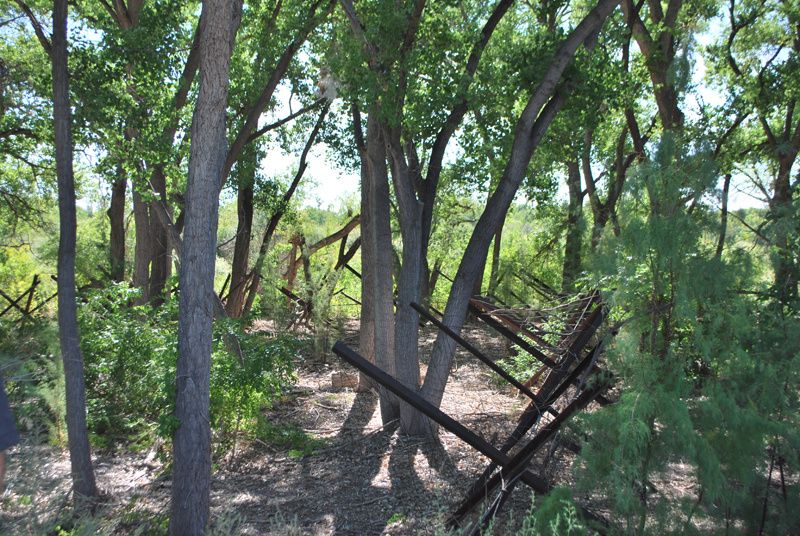
I spent a few hours the other day walking along the bosque, the area around the Rio Grande. I started comparing what I was seeing to the rivers we've kayaked on. Here, there are no kyakers, few people fishing and almost no families along the rivers edge. The river is often low and fails to live up to its namesake, meaning "Grand River". In Dayton, the river has been important in uniting groups and the greater Dayton community. We as a group seek to let it bring us together without viewing it only in terms of how it can serve us. But here, the river has always been viewed as a nuisance when it floods million dollar homes that should have never been built on its banks. It's viewed as something to be controlled with jetty jacks and dams, something that's not connected in complicated ways to the ecosystem around it and ultimately, something that can be manipulated to serve human interest without consequence. 

Fortunately, much like in Dayton, changes are being made because people are realizing what we've done. River Stewards has given me tools to help and reason to hope that here, in Dayton, and everywhere, water resources will be treated with the respect they deserve and changes will be made to the way people view our rivers. 

The jetty jacks installed in the fifties to prevent flooding:

The Rio Grande itself:

I consider both Dayton and Albuquerque home, and I hope that I can not only see changes being made to protect our resources in both regions, but also that I can help. 

-Maddi Irwin, 2015 Cohort


Monday, December 31, 2012

An Energy Nerd's Reflection


Hello Stews,

As the year ends, I have realized the great impact River Stewards has had upon my experiences in my collegiate career.  I have a much greater appreciation for the city of Dayton, the great water resources available and how the city utilizes its resources.   I have also learned a great deal about sustainability through River Stewards and joining Sustainability Club on campus. 

One part of sustainability that has really caught my interest is in energy.  I am currently studying to be an electrical engineer and co-op at an energy company, Duke Energy.  During the River Steward summer orientation, I made a joke, to Leslie’s disliking, that I work for a company that pollutes our air and water, and I felt like I needed to balance that out with something that protects our environment.  Although this was meant as a joke, it is not a joke that energy production is a large contributor to pollution today.  However, being an employee of a large energy company has given me a unique perspective on sustainable energy and what is being done to make our energy as clean as possible.

A hot topic in clean energy is renewable energy.  In the United States, this clean energy has received a large push by many people and governments to become a more prominent way for our energy to be produced.  I am all for renewable energy, but there are many issues with it for energy companies who would be the ones most using this new means of energy production.  For example, many wind farms have been built across the USA.  A major problem with wind farms is that large energy companies lose money by allowing the windmills to produce energy.  However, the government gives companies money for producing wind energy to cover the costs. With the shape our government is in now, I am not sure how much longer this subsidizing will last.  There are many advancements in renewable energy that need to be made in order for this to be a main producer of energy for our nation, but I am optimistic for these future advancements.

In the Midwest, against our liking, coal is a main source of energy because of its availability, price, and efficiency.  To our liking, the government has put many environmental regulations on the production of coal that is causing many coal plants to be shut down because they cannot meet these regulations. Because of the regulations, there are many investments being made by energy companies to make our energy cleaner.  Many coal power plants have scrubbers installed that remove about 95% of sulfur oxide from the smoke from coal. 

http://www.youtube.com/watch?v=yCMchx6Q9Is

Energy companies, including Duke Energy, are also investing in a new way of burning coal through an Integrated Gasification Combine Cycle (IGCC).  This process turns coal into a gas so harmful chemicals can be removed from the coal before it is burned.

http://www.youtube.com/watch?v=28UrjfyAh-U

Although it would be ideal to stop burning coal all together, the reality is this is not economically possible based on demand and profit.  Next week I will begin my second co-op term with Duke Energy and am very excited to see other steps that can be done with our energy companies to better protect our environment.  My experiences as a River Steward have allowed me to make connections from my job to the effects on the environment and I am excited to continue to learn and apply more as a River Steward.

Drew Bolubasz – 2015 Cohort